

Table of contents

Have you ever wondered why some marketing campaigns attract the right customers while others generate clicks but very few sales? The difference often comes down to understanding your audience. Knowing the types of market segmentation helps businesses divide a broad market into smaller groups with shared characteristics, needs and purchasing behaviors. This allows marketers to create more relevant messages, choose appropriate channels and allocate their budgets more effectively.
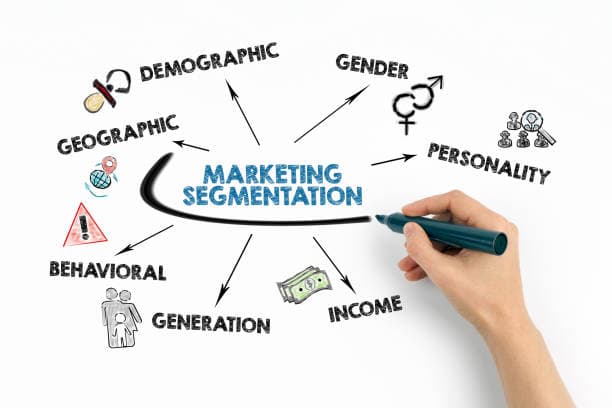
The four main types of market segmentation are demographic, geographic, psychographic and behavioral segmentation. Demographic segmentation focuses on who customers are, geographic segmentation considers where they live, psychographic segmentation explores their interests and values, while behavioral segmentation examines their purchasing habits and interactions with a brand. Together, these methods help businesses identify their ideal customers and develop more targeted marketing strategies.
01What Is Market Segmentation and Why Does It Matter?
Market segmentation is the process of dividing a broad target market into smaller groups of consumers or businesses that share similar characteristics, needs, preferences or behaviors.
Instead of addressing everyone with the same marketing message, a company identifies distinct customer segments and adapts its products, communication and promotional activities to each group's expectations.
For example, a company selling project management software may target freelancers, small businesses and large enterprises. Although all three groups need organizational tools, their budgets, priorities and purchasing decisions can be very different.
Why is market segmentation important for businesses?
A well-defined market segmentation strategy offers several practical advantages:
- More relevant marketing campaigns: Businesses can adapt their messages to the specific needs and expectations of each audience.
- Better customer understanding: Segmentation helps identify purchasing motivations, preferences and common challenges.
- More efficient advertising budgets: Companies can prioritize audiences that are more likely to be interested in their offers.
- Stronger customer relationships: Personalized communication makes interactions more relevant throughout the customer journey.
- Improved positioning: Understanding different customer groups helps businesses communicate their competitive advantages more clearly.
Market segmentation also supports better decision-making. Rather than relying on assumptions about what customers want, businesses can use research, customer feedback and digital analytics to identify meaningful audience patterns.
02What Are the 4 Types of Market Segmentation?
The four traditional types of market segmentation provide different perspectives on customer characteristics and purchasing decisions. Each answers a specific marketing question:
- Demographic segmentation: Who are your customers?
- Geographic segmentation: Where are your customers?
- Psychographic segmentation: Why do your customers make certain choices?
- Behavioral segmentation: How do your customers interact with products and brands?
Understanding these differences helps businesses build more accurate customer profiles and develop a stronger target audience segmentation strategy.
1. Demographic Market Segmentation: Understanding Who Your Customers Are
Demographic segmentation divides a market according to measurable population characteristics. It is one of the most widely used approaches because demographic information is generally easier to collect and organize than personal attitudes or motivations.
Common demographic segmentation variables include:
- Age: Different age groups may have different product preferences and purchasing priorities.
- Gender: Certain products and services may appeal to audiences with different gender-related needs.
- Income: Purchasing power influences product choices, pricing expectations and spending habits.
- Education: Educational backgrounds can influence information needs and product preferences.
- Occupation: Professional roles often determine specific service or equipment requirements.
- Family size and life stage: A single professional, a young parent and a retired couple may have different priorities.
Practical example: A financial services company may create separate campaigns for university graduates, working professionals and people approaching retirement. Each group has different financial priorities, so the communication should reflect those differences.
When should businesses use demographic segmentation?
This approach is particularly useful for B2C businesses, e-commerce brands, educational institutions, financial services and companies offering products designed for specific population groups.
However, demographic information does not always explain purchasing motivation. Two customers with the same age and income may have completely different interests and buying habits. Combining demographic data with behavioral or psychographic insights provides a more complete picture.
2. Geographic Market Segmentation: Reaching Customers in the Right Location
Geographic segmentation divides a target market according to the physical location of customers or potential buyers.
It assumes that location can influence consumer needs, product demand, accessibility and purchasing decisions. A company's marketing strategy may therefore need to change depending on the region it wants to reach.
Common geographic segmentation variables include:
- Country, region and city.
- Neighborhood or postal code.
- Urban, suburban or rural areas.
- Climate and seasonal conditions.
- Population density.
- Local language and cultural preferences.
Practical example: A home improvement company operating in several cities may promote air conditioning installation in warmer regions while focusing on heating solutions in colder areas. Its services remain similar, but its advertising messages reflect local demand.
Geographic segmentation is also valuable for businesses investing in local SEO, Google Business Profile optimization and location-based advertising.
For instance, a digital marketing agency serving several cities can create location-specific campaigns to reach companies searching for SEO, website development or social media management in their area.
When should businesses use geographic segmentation?
It is particularly effective for:
- Local service providers.
- Retail stores and restaurants.
- Real estate companies.
- Tourism and hospitality businesses.
- Companies expanding into new regional markets.
One limitation is that customers living in the same area do not necessarily share the same needs. Geographic data is therefore more useful when combined with demographic and behavioral information.
3. Psychographic Market Segmentation: Understanding Why Customers Buy
Psychographic segmentation groups customers according to their psychological characteristics, lifestyles, interests, values, attitudes and personality traits.
Unlike demographic segmentation, which describes who customers are, this approach explores what motivates their decisions and what they value.
Important psychographic segmentation variables include:
- Lifestyle: Daily routines, activities and personal habits.
- Interests: Hobbies, professional interests and preferred activities.
- Values: Environmental responsibility, convenience, quality or social commitment.
- Personality: Preferences such as risk-taking, practicality or creativity.
- Attitudes: Opinions and perceptions about products, services and brands.
- Social class and aspirations: Lifestyle expectations and purchasing priorities.
Practical example: Consider two customers interested in buying a new smartphone. The first prioritizes affordability and practical features, while the second values premium design, innovation and brand reputation.
Although both customers may belong to the same demographic group, their motivations differ. A company can use psychographic segmentation to create distinct messages emphasizing value for money or premium technology.
How can businesses collect psychographic data?
Unlike basic demographic information, psychographic insights often require more qualitative research.
Businesses can use:
- Customer surveys and questionnaires.
- Interviews and customer feedback.
- Social media interactions.
- Reviews and online discussions.
- Website content preferences.
- Customer personas and market research.
Psychographic segmentation is especially useful when a business wants to strengthen its brand positioning, differentiate its offer or create more persuasive marketing messages.
Its main challenge is that personal motivations can be difficult to measure accurately. Businesses should validate assumptions through customer research rather than relying on stereotypes.
4. Behavioral Market Segmentation: Analyzing What Customers Actually Do
Behavioral segmentation divides customers according to their actions, purchasing patterns and interactions with a product, service or brand.
Rather than focusing only on customer characteristics, it examines observable behaviors to understand how people make purchasing decisions.
Common behavioral segmentation variables include:
- Purchase frequency: How often customers buy a product or service.
- Brand loyalty: Whether customers repeatedly choose the same company.
- Usage rate: How frequently customers use a product.
- Purchase occasion: When or why customers make a purchase.
- Benefits sought: The specific advantages customers expect from an offer.
- Customer journey stage: Whether someone is discovering, evaluating or purchasing a product.
- Engagement level: How customers interact with emails, advertisements, websites and social media content.
Practical example: An e-commerce company can identify four types of visitors:
- New visitors discovering its products for the first time.
- Returning visitors who regularly browse product pages.
- Customers who add products to their shopping carts without completing a purchase.
- Existing customers who frequently make repeat purchases.
Each group requires a different marketing approach. New visitors may benefit from educational content, abandoned-cart visitors may receive a reminder, and loyal customers may appreciate exclusive offers.
Behavioral segmentation is particularly powerful in digital marketing, where businesses can analyze website interactions, conversion paths and campaign engagement.
However, companies must collect and use customer data responsibly, respect privacy requirements and obtain consent where applicable.
03Types of Market Segmentation Compared: Which One Should You Use?
The four approaches are complementary rather than competing strategies. Each provides a different insight into the audience, and combining them can help businesses create more precise market segments.
Here is a practical comparison:
Segmentation type | Main question | Key variables | Best application |
Demographic | Who are they? | Age, income, education, occupation | Customer profiles and product positioning |
Geographic | Where are they? | Country, city, climate, region | Local marketing and regional campaigns |
Psychographic | Why do they buy? | Values, interests, lifestyle, personality | Branding and personalized messaging |
Behavioral | What do they do? | Purchase history, loyalty, engagement | Retargeting, conversion and retention |
Can you combine different types of market segmentation?
Absolutely. In fact, combining several approaches often produces more actionable audience groups than relying on a single characteristic.
Consider a company selling premium fitness equipment online. It could combine:
- Demographic segmentation: Adults with sufficient purchasing power.
- Geographic segmentation: Customers located in areas where delivery and installation are available.
- Psychographic segmentation: People interested in fitness, wellness and an active lifestyle.
- Behavioral segmentation: Visitors who repeatedly view premium equipment or have previously purchased fitness accessories.
The result is a more specific customer segment: people who have the financial capacity, interest and demonstrated purchasing intent to consider premium fitness equipment.
This combination helps the company create relevant advertising messages, select suitable communication channels and develop more personalized customer experiences.
04How to Build an Effective Market Segmentation Strategy in 5 Steps
Knowing the four types of market segmentation is only the starting point. To make segmentation useful, businesses need a structured process that connects customer insights with measurable marketing objectives.
Step 1: Define Your Business Objectives
Start by identifying what you want to achieve.
Are you trying to increase website conversions, attract qualified leads, improve customer retention or launch a new product?
Your objective determines which customer characteristics and behaviors you should investigate.
For example, a company seeking more qualified B2B leads may prioritize business size, industry, purchasing authority and professional needs.
Step 2: Collect and Analyze Customer Data
Gather information from reliable sources, including:
- CRM records and existing customer databases.
- Website analytics and conversion reports.
- Customer surveys and interviews.
- Social media engagement.
- Sales and customer support feedback.
- Market research and competitor analysis.
The goal is to identify meaningful patterns rather than collect as much information as possible.
Step 3: Choose the Most Relevant Segmentation Variables
Select the variables that directly relate to your objectives.
For example, a local service provider may benefit from geographic and behavioral segmentation, while an online subscription business may prioritize usage frequency, engagement and customer loyalty.
Avoid creating segments based on characteristics that have no clear relationship with purchasing decisions.
Step 4: Evaluate and Prioritize Your Customer Segments
Not every segment represents a worthwhile business opportunity.
Before investing in a campaign, evaluate each segment using five criteria:
- Measurable: Can you estimate its size, characteristics and potential?
- Accessible: Can you reach these customers through relevant channels?
- Substantial: Is the segment commercially significant enough to justify investment?
- Differentiable: Does it have distinct needs or characteristics?
- Actionable: Can your business develop a specific offer or marketing campaign for it?
These criteria help distinguish useful market segments from audience groups that look interesting but offer little practical value.
Step 5: Create Targeted Campaigns and Measure Performance
Once your segments are defined, adapt your marketing strategy to each group.
This may involve developing different landing pages, adjusting advertising messages, creating tailored email campaigns or publishing content that addresses specific customer concerns.
Then monitor performance through relevant marketing KPIs, such as:
- Click-through rate (CTR).
- Conversion rate.
- Cost per lead (CPL).
- Customer acquisition cost (CAC).
- Customer lifetime value (CLV).
- Customer retention rate.
Review the results regularly and refine your segments when customer preferences or market conditions change.
05Common Market Segmentation Mistakes Businesses Should Avoid
Even a well-planned segmentation strategy can produce disappointing results when businesses rely on inaccurate assumptions or fail to connect their insights with marketing actions.
Here are five common mistakes to watch out for.
1. Relying on Demographic Data Alone
Age, income and location provide useful information, but they do not necessarily explain what motivates a purchase.
Better approach: Combine demographic information with psychographic and behavioral insights to understand both customer characteristics and purchasing motivations.
2. Creating Too Many Customer Segments
Dividing an audience into dozens of small groups can make marketing campaigns difficult to manage and expensive to personalize.
Better approach: Focus on a manageable number of commercially relevant segments that your team can realistically target.
3. Ignoring Customer Behavior
A business may have detailed customer profiles but still overlook valuable signals such as repeat purchases, abandoned carts and website engagement.
Better approach: Use CRM data and website analytics to understand how customers interact with your brand.
4. Using the Same Marketing Message for Every Audience
A generic message rarely addresses the different expectations of every customer group.
Better approach: Adapt your content, offers and advertising messages to each segment's priorities and stage in the customer journey.
5. Failing to Update Your Segmentation Strategy
Customer preferences, purchasing habits and market conditions evolve. A segmentation model built several years ago may no longer reflect your current audience.
Better approach: Review your customer data periodically and adjust your segments according to new insights and campaign performance.
06How Digital Marketing Helps Turn Market Segmentation into Results
Identifying customer segments is valuable, but businesses need the right digital marketing strategy to reach and engage those audiences.
This is where data-driven marketing, SEO, paid advertising and social media management become particularly important.
A well-developed digital marketing strategy connects audience insights with the channels and messages most likely to attract qualified prospects.
For example:
- SEO: Creates content that answers the specific questions and search intentions of different audience segments.
- Search Engine Advertising (SEA): Targets relevant search queries and potential customers with specific commercial needs.
- Social Media Marketing: Delivers tailored content and advertising to audiences based on their interests and interactions.
- Email Marketing: Supports customer retention through relevant messages based on engagement and purchasing history.
- Conversion Rate Optimization (CRO): Improves landing pages and user journeys according to audience expectations.
Choosing the right communication approach also matters. Some audiences respond better to educational content that attracts potential customers, while others may be reached through more direct prospecting methods. Understanding the differences between outbound vs inbound marketing helps businesses select an approach that matches their objectives and customer journey.
At RKTEC Solution, digital marketing strategies can bring these different elements together through SEO, SEA and social media management. The objective is to help businesses improve their online visibility, reach relevant audiences and generate more qualified opportunities.
Discover how our digital marketing services can support your business growth with a strategy built around your objectives and target customers.
07Final Thoughts: Choosing the Right Types of Market Segmentation for Your Business
Understanding the types of market segmentation is essential for businesses that want to move beyond generic marketing and communicate with the right audience.
Demographic, geographic, psychographic and behavioral segmentation each reveal a different aspect of customer needs and purchasing decisions. While one method can provide a useful starting point, combining several approaches often creates a more complete understanding of your target market.
The most effective strategy is not necessarily the one with the most segments. It is the one that identifies meaningful customer groups, understands their expectations and translates those insights into relevant marketing actions.
With the right data, tools and digital marketing expertise, businesses can turn customer segmentation into a practical growth strategy.
Ready to make your marketing more targeted and effective? RKTEC Solution can help you analyze your digital presence, understand your audience and build a digital marketing strategy aligned with your business goals. Contact our team to discuss your project and explore the right approach for reaching your ideal customers.
08Frequently Asked Questions
What are the 4 main types of market segmentation?
The four main types of market segmentation are demographic, geographic, psychographic and behavioral segmentation. Demographic segmentation focuses on customer characteristics, geographic segmentation considers location, psychographic segmentation explores interests and values, and behavioral segmentation examines purchasing habits and brand interactions.
What is the difference between demographic and psychographic segmentation?
Demographic segmentation groups customers according to measurable characteristics such as age, income, education and occupation. Psychographic segmentation focuses on psychological factors, including lifestyle, personality, interests and values. Combining both approaches helps businesses understand not only who their customers are but also what motivates their purchasing decisions.
Why is market segmentation important in digital marketing?
Market segmentation helps businesses identify the audiences most relevant to their products or services. In digital marketing, it supports more targeted advertising, personalized content, relevant SEO strategies and effective customer journeys. By understanding audience needs and behaviors, companies can improve campaign relevance and make better use of their marketing budgets.